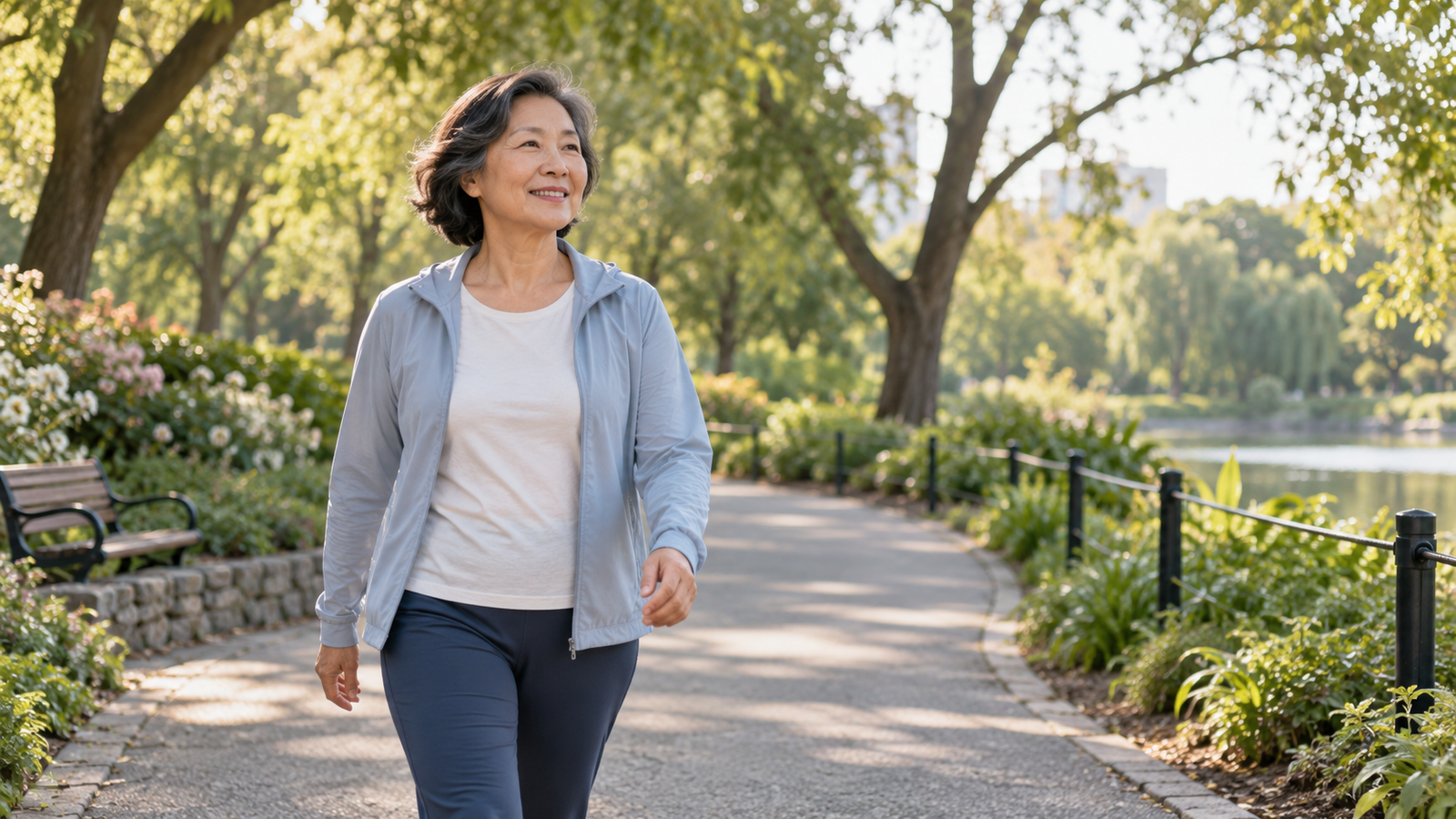
The short answer: start smaller than you think, repeat it often, and build gradually. A few minutes of movement counts. Over time, aim for a mix of aerobic activity, strength work and balance practice—not an all-or-nothing workout plan.
Why movement matters after 50
Regular physical activity can support heart health, mobility, strength, balance, mood and independence. The broad public-health target for older adults is at least 150 minutes of moderate-intensity aerobic activity each week, muscle-strengthening activity on two days, and balance work. That is a destination, not a starting requirement. If you are inactive now, begin with what feels manageable and increase gradually.
Check in before you begin
Speak with a healthcare professional before starting or substantially changing exercise if you have an unstable medical condition, a recent operation or injury, unexplained chest discomfort, dizziness, fainting, unusual breathlessness, or a recent fall. Ask how any heart, lung, joint, neurological or metabolic condition should shape your plan.
Stop exercising and seek urgent medical help for chest pain, fainting, severe or sudden shortness of breath, or new weakness or numbness. Persistent or worsening pain is also a reason to pause and get advice.
Use the three-part formula
1. Aerobic movement
Walking, cycling, swimming, dancing and low-impact exercise all qualify. Use the talk test: at moderate intensity, you should be able to talk but not sing comfortably. Begin at an easier pace if you are returning after a long break.
2. Strength
Strength work helps preserve the muscles used for everyday tasks. Useful beginner movements include sit-to-stands from a sturdy chair, wall push-ups, heel raises while holding a stable support, and light resistance-band rows. Move slowly, keep breathing and stop if a movement causes sharp pain.
3. Balance
Practise beside a kitchen counter or another secure support. Try standing with your feet closer together, shifting weight from side to side, or briefly lifting one foot. Safety matters more than difficulty. Do not practise balance exercises alone if you are at high risk of falling.
A gentle two-week starter plan
Week 1: make it repeatable
- Walk or do another comfortable aerobic activity for 5–10 minutes on five days.
- On two non-consecutive days, do one easy set of 6–10 sit-to-stands, wall push-ups and supported heel raises.
- On three days, add two or three minutes of supported balance practice.
- Finish feeling that you could have done a little more.
Week 2: add a little
- Add two to five minutes to some aerobic sessions, or split the activity into shorter bouts.
- Repeat the strength circuit twice only if the first week felt comfortable.
- Keep balance practice close to a solid support.
- Take an easier day when fatigue, pain or illness calls for it.
After that, increase only one thing at a time: minutes, pace, resistance or repetitions. This makes it easier to notice how your body responds.
Make the habit easier
- Attach it to a routine: walk after breakfast or practise sit-to-stands before lunch.
- Keep a simple record: note the activity and minutes, not calories or perfection.
- Prepare the environment: supportive footwear, clear floors, good lighting and water nearby.
- Choose enjoyable movement: consistency matters more than finding the “best” exercise.
- Use company: a friend, class or walking group can add confidence and accountability.
What progress should feel like
Progress may show up as easier stairs, steadier balance, a longer comfortable walk or more confidence getting up from a chair. Mild muscle tiredness can be normal when starting. Sharp pain, swelling, symptoms that alter your walking, or soreness that keeps worsening are signs to adjust and seek advice if needed.
Healthy Years Compass provides general education, not individual medical advice. A qualified healthcare professional or physiotherapist can adapt activity to your health, mobility and fall risk.
Sources and further reading
- National Institute on Aging: Exercise and Physical Activity
- U.S. Office of Disease Prevention and Health Promotion: Activity for Older Adults
- National Institute on Aging: Exercising With Chronic Conditions